Dimitris Lolos is a physiotherapist, who has graduated from the International University of Greece (DI.PA.E, formerly ATEI of Thessaloniki), and has specific knowledge of musculoskeletal, neurological diseases and sports injuries.
His clinical experience from 2020 to the present, includes the 251 General Aviation Hospital as a Captain, the HYGEIA COMPLEX Physiotherapy Center by Telidis, where he worked as an associate physiotherapist, as well as his collaboration with sports teams (ARIS PAE and various teams of the 3rd National League).
Afterwards, he worked in the Municipality of Kalpaki Ioannina and in a Physiotherapy laboratory in Ioannina (as a physiotherapist). He also has extensive experience in in-home therapies with people in need of self-care and rehabilitation after injuries or surgeries. As a healthcare professional he continues, along with completing his university studies, to further educate himself through seminars, study and research in order to achieve the highest possible results for his patients.
In particular, he further specialises in the following:
ERGON IASTM Technique (Mobilization-Release of Myofascial Tissue)
Mini BOBATH (Neurodevelopmental Treatment)
Sports Bandage Techniques (KinesioTaping, Taping)
TherapeuticMassage Services
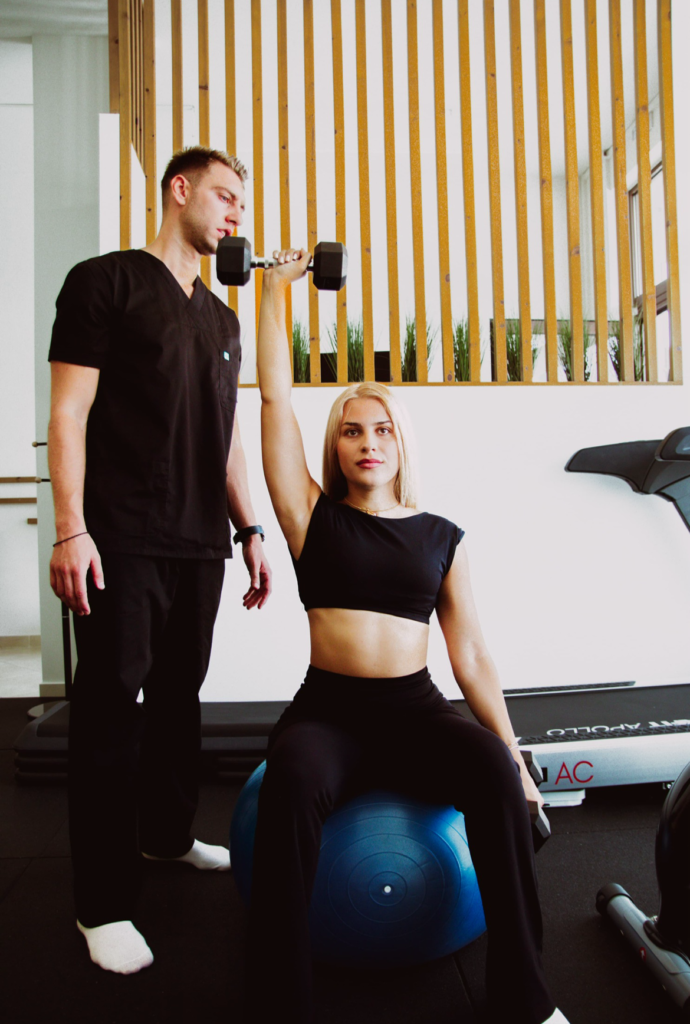
Strength and conditioning for Sports Physiotherapists
Postoperative Rehabilitation
Myofascial Dry Needling
Schokwave
Specialist in post operative rehabilitation
Specialist in Neurological Treatment (Central Nervous System disorders : Stroke, Parkinson Disease, Multiple Sclerosis etc.)
Finally, his career has been defined by his focus on the individual needs of each patient, as described by them, and the personalization of the evaluation and treatment for any body, as each case is considered different. For this reason, the cause of the pain should be thoroughly investigated through certified tests, that will reveal the pathology at first, and then the application of the appropriate scientific treatment protocol will follow.